
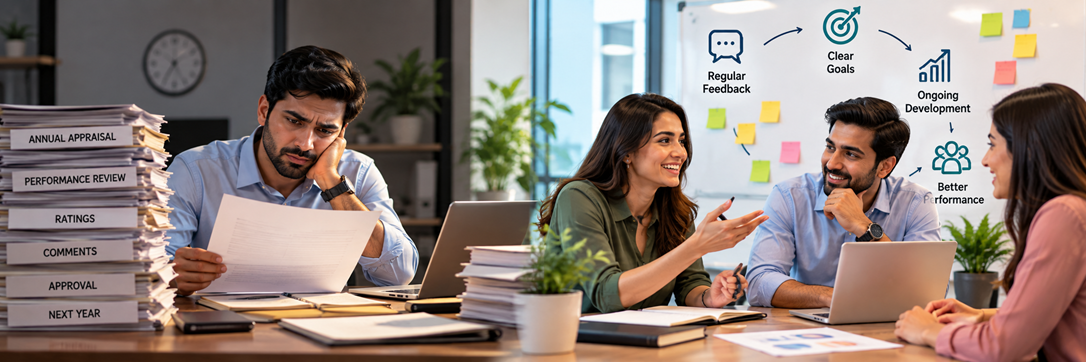
For decades, annual performance appraisals have been the standard way organizations evaluate employee performance. Once a year, managers sit down with employees, review their achievements, discuss weaknesses, and assign ratings.
However, the modern workplace has changed. Employees work on faster-moving projects, goals shift more frequently, and businesses need continuous improvement to stay competitive. A single conversation at the end of the year is no longer enough to support employee growth.
Many organizations are now realizing that traditional annual appraisals are not delivering the results they expected. Instead, companies are moving toward continuous performance management, a more flexible approach focused on regular feedback, clear goals, and ongoing development.
Why Traditional Annual Appraisals Are Not Working
Annual reviews often create more stress than value for both employees and managers. One major problem is that feedback arrives too late. If an employee faces challenges in January but receives feedback in December, there has been little opportunity to correct the issue or improve performance.
Annual appraisals also rely heavily on past events. Managers may struggle to remember every achievement, challenge, or contribution from the entire year, which can make evaluations incomplete or inaccurate.
Common problems with traditional annual reviews include:
Where annual reviews fall short:
- Feedback comes too late to create meaningful improvement
- Employees are unsure about expectations throughout the year
- Discussions focus more on ratings than development
- Managers spend significant time preparing paperwork instead of coaching
- High performers may not receive enough recognition
- Performance issues may remain unnoticed for months
Instead of helping employees grow, annual reviews can sometimes feel like a judgment rather than an opportunity.
The Shift Toward Continuous Performance Management
Modern organizations are replacing yearly evaluations with ongoing performance conversations.
Continuous performance management focuses on frequent discussions between employees and managers. These conversations help employees understand what they are doing well, where they can improve, and what support they need.
Instead of asking, "How did you perform last year?", organizations are asking:
"How can we help you succeed today and in the future?"
Regular check-ins create a culture where feedback becomes a normal part of work rather than something employees only experience once a year.
These conversations can include:
What ongoing conversations cover:
- Progress updates
- Goal discussions
- Skill development
- Recognition of achievements
- Problem-solving support
- Career growth planning
Set Clear Goals and Track Progress Regularly
One of the biggest challenges with annual appraisals is that employees often do not know whether they are meeting expectations until the year is almost over. A modern performance approach focuses on clear, measurable goals that are reviewed regularly.
Managers and employees should work together to define:
What every goal should define:
- What needs to be achieved
- How success will be measured
- What resources are needed
- What timeline should be followed
Regular goal reviews allow teams to adjust priorities when business needs change.
For example, if an employee's role changes due to a new project, their goals can be updated immediately instead of waiting until the next annual review.
Make Feedback a Two-Way Conversation
Effective performance management is not just about managers giving feedback. Employees should also have opportunities to share their thoughts.
A strong feedback culture encourages employees to discuss:
What employees should be able to raise:
- Challenges they are facing
- Support they need from leadership
- Skills they want to develop
- Ideas for improving processes
When employees feel heard, they become more engaged and motivated. Managers also gain valuable insights into team challenges that may not be visible through performance reports alone.
Focus on Employee Development, Not Just Ratings
Traditional appraisals often focus heavily on scores and ratings. While ratings may be useful for certain decisions, they should not be the main purpose of performance discussions. The real goal should be employee growth. Development-focused conversations help employees understand:
What development conversations reveal:
- Their strengths
- Areas for improvement
- Future career opportunities
- Training needs
- New responsibilities they can take on
Employees are more likely to stay motivated when they see that the organization is invested in their growth.
Recognize Achievements Throughout the Year
Recognition should not wait until the annual review. Employees want to know when their efforts are making an impact. Simple and timely recognition can improve motivation, confidence, and engagement.
Recognition can include:
A two-line thank-you today outweighs a bonus discussed twelve months from now.
A culture that regularly recognizes employees creates a stronger connection between individual contributions and organizational success.
Use Technology to Support Modern Performance Management
Managing continuous feedback manually can become challenging as organizations grow. Modern HR systems help companies organize performance discussions, track goals, maintain employee records, and monitor development progress.
Platforms like Trackk HRMS allow organizations to move beyond traditional paperwork by providing structured tools for performance tracking, employee feedback, goal management, and better decision-making. Technology does not replace meaningful conversations. Instead, it helps managers make those conversations more consistent and valuable.
Final Thoughts
Annual appraisals are not completely disappearing, but organizations are recognizing that one yearly conversation cannot support continuous employee growth. The future of performance management is based on regular feedback, clear goals, employee development, and open communication.
By moving away from outdated annual reviews and adopting a continuous performance culture, businesses can create more engaged employees, stronger teams, and better results.
Performance improvement is not a once-a-year activity. It is an ongoing journey built through regular conversations, support, and opportunities to grow.