
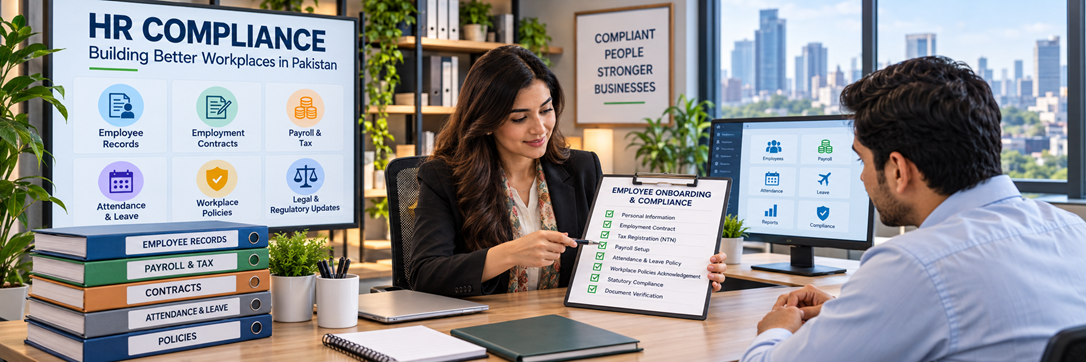
Running a successful organization is not only about hiring talented employees and achieving business goals. Companies must also ensure that their HR processes follow proper compliance standards to protect employees, reduce risks, and maintain smooth operations.
In Pakistan, HR departments play an important role in managing employee records, payroll processes, workplace policies, attendance, and legal requirements. As businesses continue to grow in 2026, maintaining proper HR compliance has become more important than ever.
A strong HR compliance framework helps companies avoid unnecessary disputes, improve transparency, and create a workplace where employees feel secure and valued.
Quick checklist for 2026
- Accurate, up-to-date employee records
- Clear, signed employment documentation
- Accurate and transparent payroll processing
- Reliable attendance and leave tracking
- Clearly documented workplace policies
- Secure handling of employee data
- Ongoing performance and development conversations
- Regular review of labor and HR requirements
Why HR Compliance Matters for Pakistani Companies
Many organizations focus heavily on business growth but underestimate the importance of HR compliance. Small mistakes in employee documentation, payroll processing, or policy management can create serious challenges in the future.
HR compliance ensures that companies maintain fair practices while protecting both employers and employees. A proper compliance system helps organizations:
What a proper compliance system helps organizations do:
- Maintain accurate employee information
- Ensure transparent salary processes
- Improve employee trust
- Reduce legal and operational risks
- Create consistent workplace practices
When HR processes are properly managed, companies can focus more on growth instead of spending time resolving avoidable issues.
Maintain Accurate Employee Records
Employee records are the foundation of effective HR management. Every company should maintain complete and updated employee information, including personal details, employment history, salary information, attendance records, leave history, and performance details.
Keeping employee records organized helps HR teams quickly access important information whenever required. It also supports better decision-making and ensures that the company has proper documentation during audits or employee-related discussions.
Many organizations still manage employee information through spreadsheets and manual files, which increases the chances of missing or outdated information. Digital HR systems provide a more secure and reliable way to manage employee data.
Outdated spreadsheets don't just slow HR down — they're where compliance gaps quietly begin.
Ensure Proper Employment Documentation
A clear employment agreement creates transparency between employees and employers. Before joining an organization, employees should receive proper documentation explaining their role, responsibilities, compensation, working conditions, benefits, and company policies.
A well-defined employment contract helps avoid misunderstandings by ensuring both parties understand their expectations from the beginning.
Companies should also regularly review employment documents to ensure they remain aligned with current business practices and HR requirements.
Improve Payroll Accuracy and Transparency
Payroll is one of the most important areas of HR compliance. Employees expect their salaries, deductions, and benefits to be calculated accurately and delivered on time. Payroll mistakes can quickly affect employee satisfaction and create trust issues.
A compliant payroll process should ensure accurate handling of:
What a compliant payroll process should get right:
- Employee salaries
- Allowances and deductions
- Attendance-based calculations
- Overtime payments
- Tax-related information
- Payroll records
Automating payroll processes reduces manual errors and helps HR teams maintain accurate salary records.
Manage Attendance and Leave Properly
Attendance and leave management are essential parts of workforce compliance. Organizations need accurate records of employee working hours, absences, late arrivals, overtime, and approved leaves. Without proper attendance tracking, companies may face challenges in payroll calculation, workforce planning, and employee management.
Modern attendance systems help organizations maintain accurate records while providing employees with better visibility into their attendance and leave balances.
Create Clear Workplace Policies
A professional organization needs clear HR policies that guide employees and managers. Policies provide employees with a better understanding of workplace expectations and help HR teams handle situations consistently. Important workplace policies may include:
Important workplace policies to have in place:
- Attendance and leave guidelines
- Employee code of conduct
- Performance management process
- Remote work policies
- Workplace behavior standards
- Disciplinary procedures
Clear policies create a fair working environment where employees understand their responsibilities.
Protect Employee Information
As companies become more dependent on digital systems, protecting employee information has become a major responsibility. HR departments manage sensitive information such as employee identity details, salary records, performance data, and personal documents.
Organizations should ensure that employee data is stored securely and only accessible to authorized individuals. Using secure HR platforms helps companies reduce the risk of data loss and maintain better control over employee information.
Focus on Employee Performance and Development
HR compliance is not only about documentation and rules. It also includes creating processes that support employee growth. Companies should regularly discuss employee goals, provide feedback, and identify development opportunities.
Moving beyond traditional yearly reviews and adopting continuous performance discussions helps employees understand expectations and improve their skills.
A strong performance management process creates better engagement and helps organizations retain valuable employees.
Stay Updated With Labor and HR Requirements
HR compliance is an ongoing process. Companies must regularly review changes in employment regulations, workplace requirements, and government policies.
HR teams should work closely with management and legal advisors to ensure company practices remain updated.
Staying proactive helps organizations avoid compliance issues and maintain smooth operations.
How HR Software Helps Companies Maintain Compliance
Managing HR compliance manually becomes difficult as organizations expand. Modern HR management systems help companies organize employee information, automate payroll, track attendance, manage leaves, maintain documents, and monitor employee performance.
Platforms like Trackk HRMS help businesses simplify HR operations by providing a centralized system for managing employee data and daily HR processes.
With the right technology, HR teams can reduce administrative work, improve accuracy, and spend more time focusing on employee experience and business growth.
Final Thoughts
HR compliance is not just a legal requirement; it is an important part of building a professional and trustworthy workplace. For Pakistani companies in 2026, maintaining accurate employee records, improving payroll accuracy, protecting employee data, and creating clear workplace policies should be a priority.
Organizations that invest in strong HR compliance practices create better experiences for employees while reducing business risks.
A compliant HR system does more than manage rules — it helps companies build stronger teams, improve efficiency, and create a workplace prepared for future growth.