
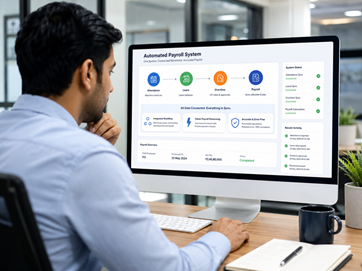
Payroll is one of the most important responsibilities in any organization. Employees expect accurate, on-time pay, while HR and finance teams must ensure that salaries, deductions, overtime, bonuses, and taxes are calculated correctly.
As organizations grow, payroll becomes more complex. Managing it through spreadsheets, manual calculations, or disconnected systems increases the risk of errors and consumes valuable administrative time.
This is why automated payroll is becoming essential. By using technology to handle repetitive calculations and payroll processes, businesses can improve accuracy, save time, strengthen compliance, and provide employees with a better payroll experience.
Reduce Payroll Errors and Manual Work
Manual payroll processes require HR or finance teams to enter and calculate large amounts of employee data. Even a small mistake in working hours, salary rates, deductions, or leave records can lead to incorrect payments.
Payroll automation reduces this risk by calculating payroll based on approved attendance, salary structures, benefits, deductions, and other employee information.
Instead of repeating the same calculations every pay period, teams can focus on reviewing exceptions and confirming that payroll data is complete. This reduces administrative workload while improving consistency across every payroll cycle.
Connect Attendance and Payroll Data
Attendance and payroll are closely connected. Working hours, overtime, unpaid leave, late arrivals, and approved absences can all affect employee pay.
When attendance and payroll are managed separately, HR teams often have to transfer information manually before payroll can be processed. This creates additional work and increases the possibility of mistakes.
An integrated system can automatically use approved attendance and leave information when calculating payroll, reducing duplicate data entry and helping organizations maintain more accurate records.
Improve Payroll Processing Speed
Payroll can become time-consuming when every calculation requires manual review.
As the workforce grows, HR and finance teams may spend days collecting attendance records, checking leave, calculating overtime, updating deductions, and preparing payroll reports.
Automation can complete many of these tasks much faster. Payroll information can be processed using predefined rules, while managers review only unusual cases or required adjustments.
Faster processing also gives organizations more time to identify and correct issues before salaries are finalized.
Support Accurate and Consistent Calculations
Employees expect payroll decisions to be fair and consistent.
Automated payroll systems allow organizations to define standard rules for salaries, overtime, allowances, deductions, bonuses, and other payroll components. Once configured, these rules can be applied consistently across eligible employees.
This reduces dependence on individual calculations and helps prevent employees from being treated differently because of manual processing errors.
Consistency is especially valuable for organizations managing multiple departments, locations, or employee categories.
Strengthen Payroll Visibility and Reporting
Modern organizations need more than a final salary figure. Managers and HR teams also need visibility into payroll costs and workforce trends.
Automated payroll systems can provide reports on:
- Total payroll costs
- Overtime expenses
- Allowances and deductions
- Department-level payroll spending
- Employee salary history
- Payroll changes between periods
Reliable payroll data helps management understand labor costs, support workforce planning, and make better financial decisions. It also makes records easier to review during reporting or audits.
Improve the Employee Payroll Experience
Payroll problems can quickly affect employee trust.
If employees receive an incorrect salary or cannot understand a deduction, they may need to contact HR repeatedly for clarification.
A modern payroll system can give employees clearer access to payslips, earnings, deductions, and payroll history. When employees can review this information easily, transparency improves and fewer routine questions need to be handled manually by HR.
Accurate and predictable payroll also helps build confidence in the organization.
A payroll mistake is never just a number, it is a direct hit to how much an employee trusts the organization.
How Technology Can Help
The value of payroll automation increases when payroll is connected with other HR processes.
A centralized HR platform can combine employee records, attendance, leave, approvals, and payroll information in one system. This reduces duplicate work and ensures that payroll calculations are based on current employee data.
With Trackk HRMIS, organizations can manage payroll alongside attendance, leave, approvals, and employee records through a centralized platform. This helps HR teams simplify payroll processing, improve workforce visibility, and reduce manual administration.
Final Thoughts
Automated payroll is no longer simply a convenience for large organizations. It is becoming an important part of efficient workforce management for businesses of all sizes.
By reducing manual calculations, connecting attendance data, improving reporting, and giving employees greater payroll transparency, automation helps organizations build a faster and more reliable payroll process.
As workplaces become more digital, organizations that modernize payroll will be better prepared to manage growth while maintaining accuracy, consistency, and employee trust.